Cathedral/Tombstone Radio
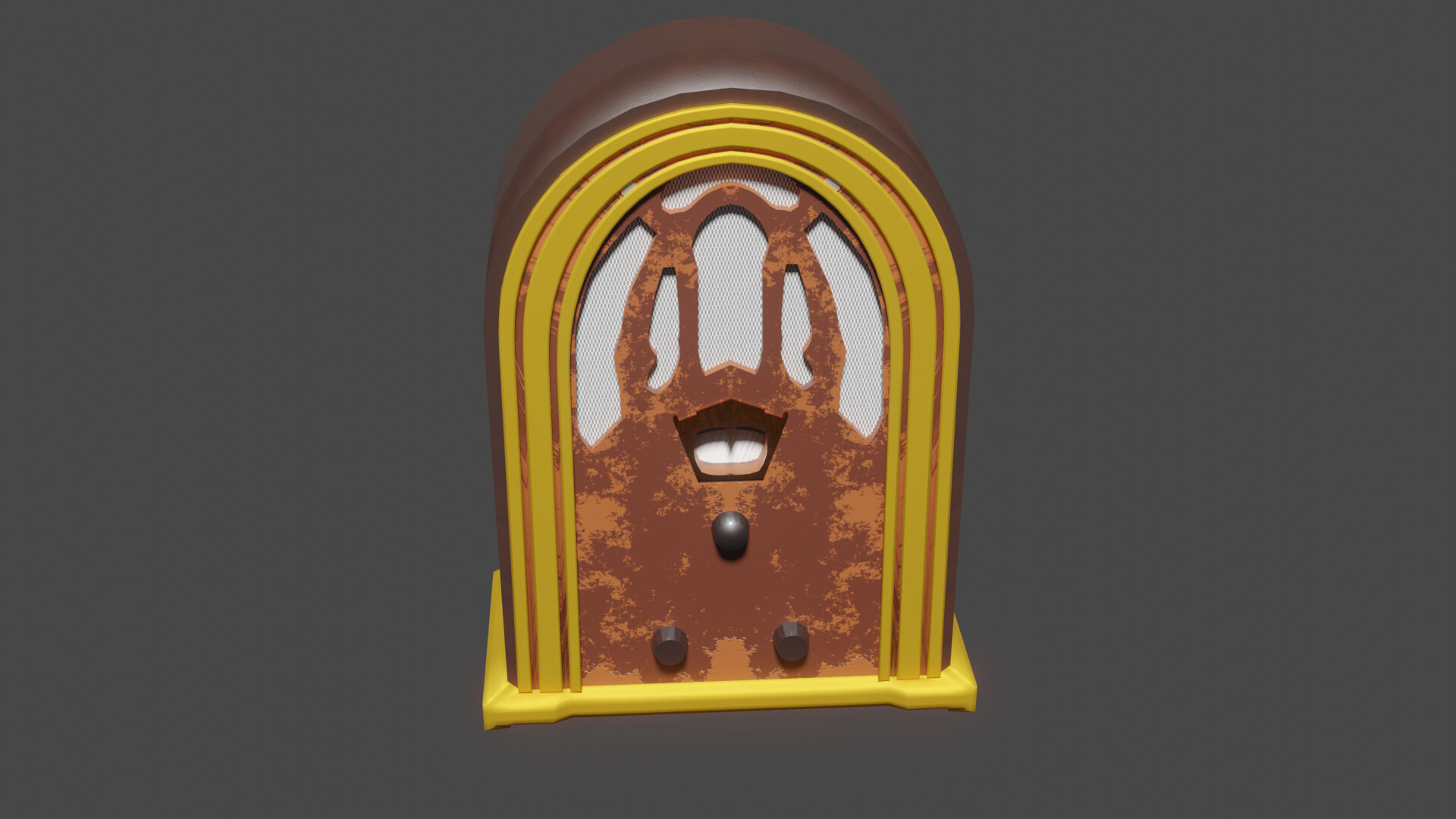
The last thing that required touching up was the gilded trim, which I was satisfied with here.
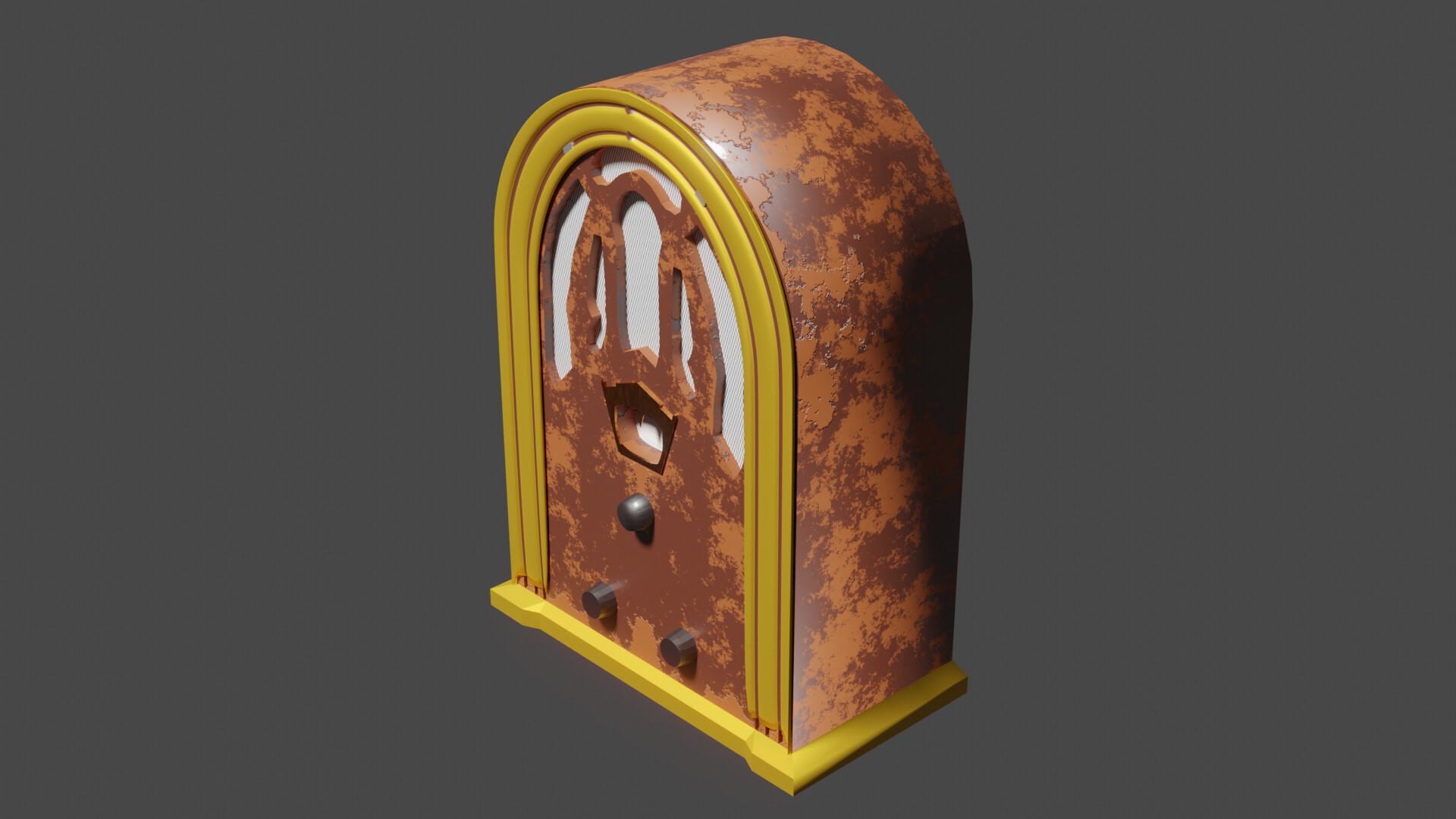
Earlier work; I liked how the frayed wood was coming along. It was an application of two Musgrave noise textures, which are generally used for terrain, but have a lot of uses outside of that.

Some progress. The outer Musgrave noise felt like a bit much, so I extruded the outer edge of the radio and gave it a darker, lacquered look. There's still noise there, but it's at, at most, an eighth of the intensity.
A video of the completed model, minor post-processing for denoising (needed it done in under a day, so my sample count is lower), and a very mild fog glow.

Lighting bake of the tricker parts, with direct lighting
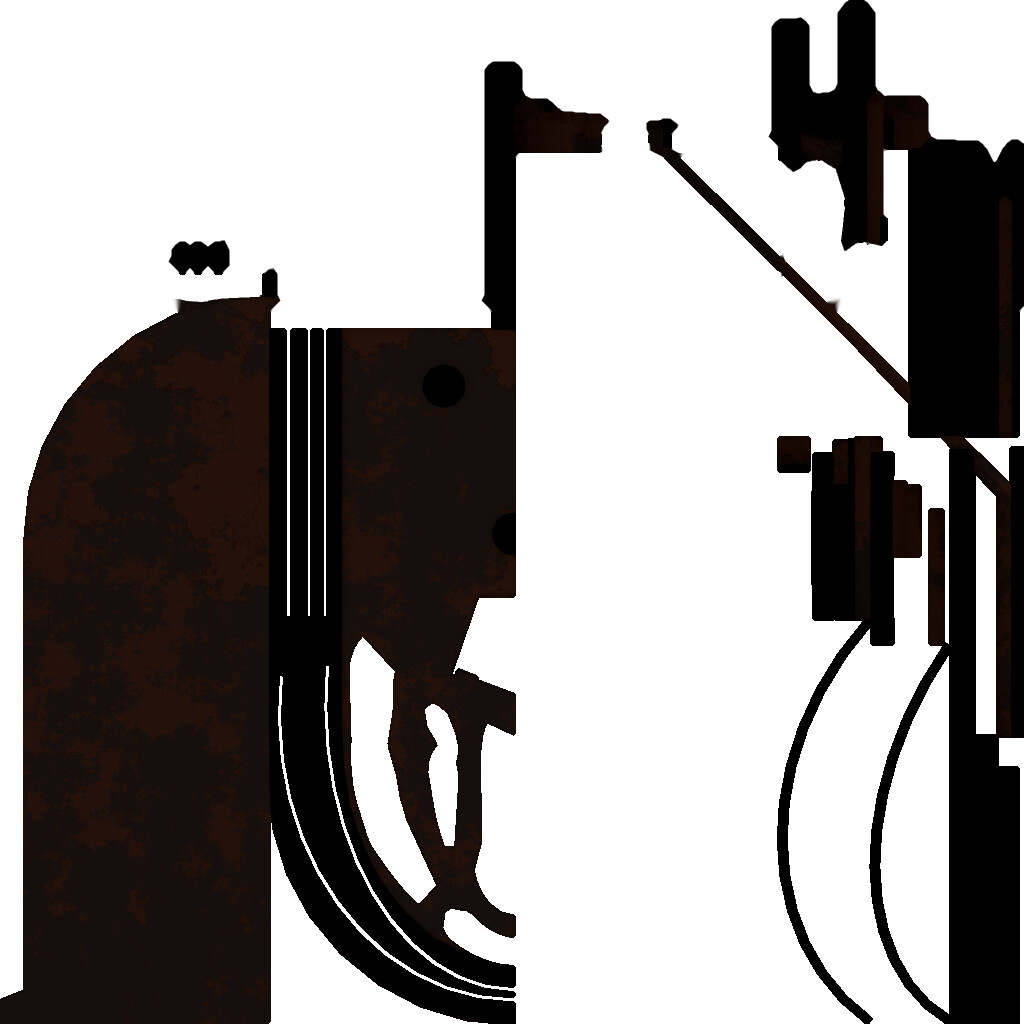
More versatile lighting bake of the trickier parts, with indirect light only.

This is the normal map, highlighting areas generated by the Musgrave noise.
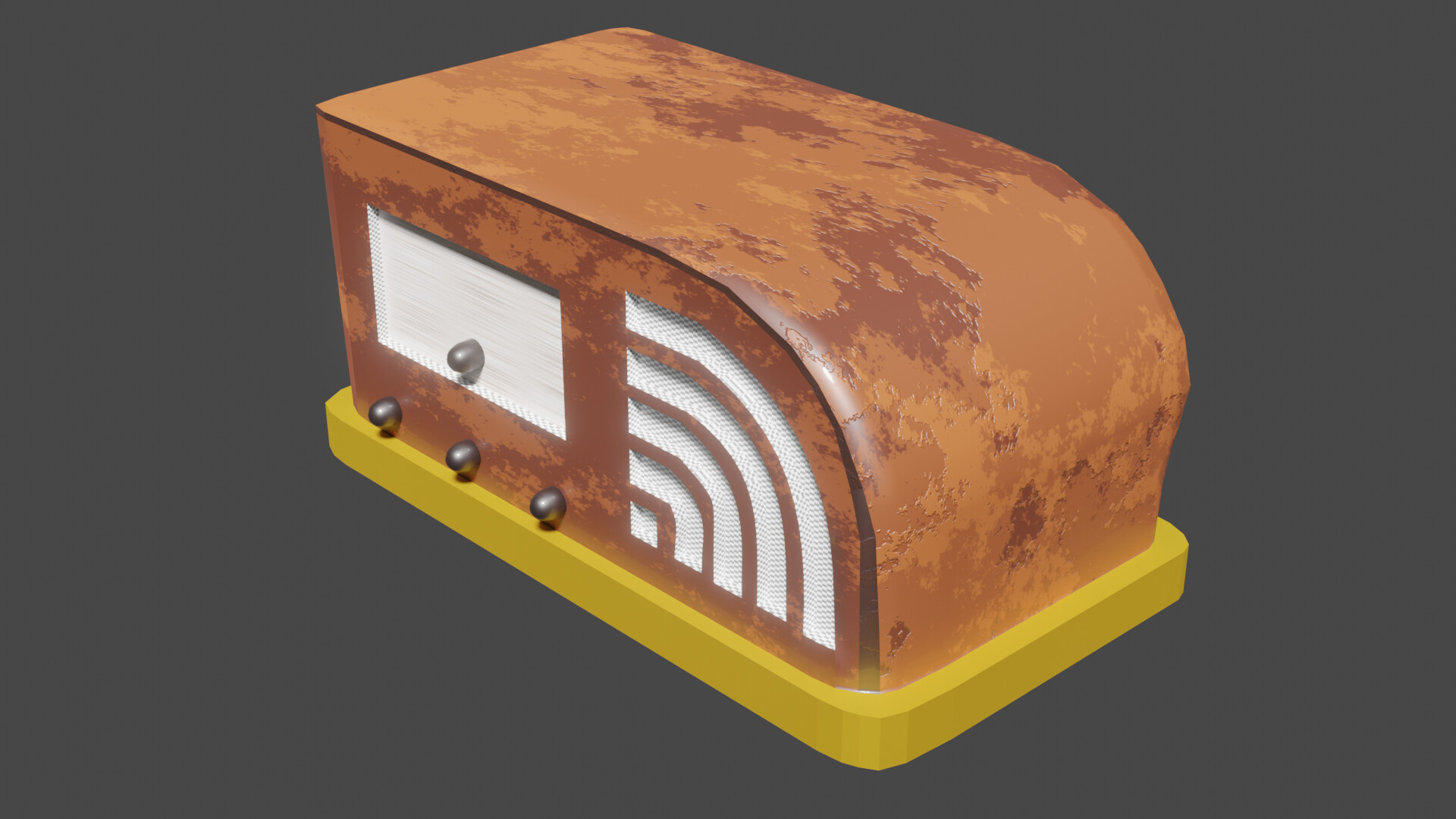
I decided to expand on these materials and make an old GE desk radio, too... no idea what I'll do with it yet, and it literally just occurred to me that these things don't have plugs! Something for later.

Putting it in red/cyan anaglyphic 3D was a total success—man, I thought I hated that corner geometry *before*, but now I know exactly how disappointed/ticked-off at it I should really be. What an age we live in!
Cathedral Radio I threw together this morning. It's often the first thing I do after I get up, just to get me in a productive mood. It's not that it isn't hard work; but there's unique satisfaction in taking that default cube and molding it into my vision...
All materials are procedurally produced. The wood was done with two layers of Musgrave noise, layered and clamped in such a way as to suggest wear and tear. You can still see artifacts of the mirror modifier if you look closely; but honestly I kind of like it, and I think it might actually reduce art fatigue to leave it like it is. The actual fabric mesh over the speaker is a simple checkerboard pattern, as at this distance it's the last thing that the player is going to see.
Geometrically, most of the front details were done with a knife projection over a mirror modifier. The initial shapes were almost entirely Bezier curves, which I find easier to sculpt into that sort of organic flow. After the projection, I could extrude them inward. This turned one of the faces into a horrible N-gon, but it isn't meant to animate and in the worst case scenario, I can triangulate it or, if I need to, break it down into quads by hand. It's more work, sure, but it isn't that bad, and I really like the result.
The whole model is 2,734 faces, which is higher than I usually go for, but I haven't decimated it, merged planar faces, or un-subdivided anything yet, so not bad, all things considered. I know, I know... it's not 1993 anymore... I'm slowly learning. Still, when you're potentially transmitting anything at high rates over a network, it doesn't hurt to pretend it is, just a little...